
tl;dr
Human needs, identities, and values show up in even the broadest initiatives.
The assignment that sounds easier than it is
A major technology company came to us with a brief that sounded straightforward enough:
Help us understand how to approach new markets for our devices.
Not “fix this so Japanese people will like it” nor “translate this thing for Brazil.”
It’s an appealing request because it suggests patience and a desire not to rush into decisions that will be awkward to explain later. It also suggests that someone didn’t do a great job at translating something last quarter and now stuff isn’t selling in Japan.
Anyway, you need structure. Something that holds together when people who weren’t in the project management meeting start using it. You need something that:
- scales across regions
- can be compared side by side
- is legible to people who weren’t in the field
- and doesn’t collapse into anecdotes
So we started where most competent teams start. Eventually we would learn something that most people discover halfway through a globalization effort, usually after a few uncomfortable meetings: we barked up the entirely wrong tree. Eventually we’ll learn that we were looking in the wrong place. There is a better way to do this. The term that some use is “glocalization” which sounds obvious until you try to do it.
But we hadn’t figured that out yet.
The sensible beginning: making the world legible
The work covered many countries and combined desk research, interviews, and fieldwork. The aim was not to become experts in one place, but to be able to look across many without losing the thread. To make that possible, we used a consistent structure for each country’s report that was pragmatic.
Thailand is a good example of this stage of the work.
It made the country feel understandable in a way that could be shared with other people. It explained how schooling worked, how technology showed up in classrooms, which platforms people used, and how devices circulated. It described the role of English, the influence of government policy, and the general shape of the technology landscape.
You could also see this clarity in small, ordinary places. In Thailand, electronic payments are everywhere, but they don’t resolve into a single system. At a 7-Eleven, you can use cash, cards, and mobile wallets—but not QR codes. Walk a few doors down to a small bakery in a popular mall and the situation reverses: QR codes are fine, mobile wallets are fine, but credit cards are not. Nothing about this is confusing once you know it. It simply means that “how people pay for things” depends less on national policy and more on where you’re standing.
We noticed that even when we are talking about a system UI, or what languages are popular in a region, or the education system, we always end up somehow describing a community in a region. Specifically, we describe diverse communities and how people in different regions use technology a little differently.
And at first, that legibility felt like progress.
The first framework that made sense
As the reports accumulated we started to ask: how can we compare these markets meaningfully? At the time it felt appropriate to call a country a market. We worked with the data from the reports and originally tried to group regions by the prevalence of technology in these regions to try and compare them.
Here is a very compelling framework that lets you compare South Korea, Brazil, and South Africa. Imagine a spectrum of how “prevalent” technology is in a country. On one end you have a country where tech is very prevalent, like South Korea – home of Samsung, LG, and the world’s fastest internet. Korean is the dominant language, yet there are dozens of keyboards to type in it on a phone. The country is connected through fast internet which is provided by ~3 giant conglomerates. Even the islands have tech solutions to bring data plans to the more remote corners. Every child has an expectation that a classroom will have smart devices and screens. Technology is diffuse which means that it is everywhere.
Moving to the other side, tech becomes scattered unevenly across a country but the infrastructure is slowly expanding – like in Brazil. There are hundreds of indigenous and many foreign diasporas outside of the main cities that vary in how connected they are to the technological landscape. For example, the Motorola Project (2020) helped preserve the Nheengatu indigenous language by translating it for phones for the first time. Within the most cosmopolitan parts you can get any brand of device and there are even some local brands that offer affordable, mid range phones and laptops. There are thousands of small Internet Service Providers offering connectivity across the entire nation, usually set up to provide internet for a specific location. The point is that technology is in a lot of places already and the programs to expand it have been around for a while.
Finally you have the other side of the spectrum where technology is not prevalent: it is clustered in specific areas for specific reasons like how it is in South Africa. There are initiatives to bring more technology and internet and data throughout the country but those initiatives are still fresh. Many people do not shop online, nor have strong opinions about different brands of smartphones. Many schools don’t have running water let alone electricity.
From there, design logic follows easily:
- Advanced features for high tech prevalent regions
- Branding and adaptability for the middle
- Robustness, affordability, and infrastructure for the regions with low tech prevalence
On paper this was tidy and the clusters were so neat in how they aligned with familiar metrics.
When we went to map Japan onto this framework, it got weird. Because it depends. Are you talking about rural Japan, where a grandmother might still be using a flip phone, or Tokyo, where a grandmother might be using a flip phone ironically?

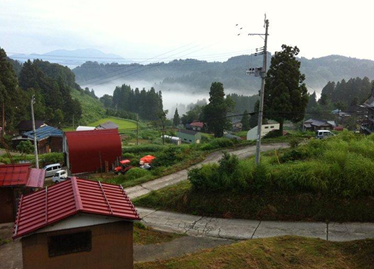
At first, these discrepancies felt manageable. We tried to add caveats, footnotes, sub-segments. Yet each of these little exceptions created a crack in the framework.
India breaks the seams
By the time we reached India, we already suspected the framework was under strain. The question wasn’t whether India was complex; it was how to approach that complexity without pretending it would resolve neatly. India is complex not just because of size and diversity, but because language, education, income, gender, and region are tightly entangled—and those entanglements shape technology use.
To try and incorporate India into our efforts, we came to a decision that English use and multilingualism is the clearest lens through which the differences between these entanglements become visible. In other words, rather than looking at the country as a unit, our research suggested that the best unit of measurement were communities who spoke differently. Who were the people who primarily spoke English and one of the other 19,200 dialects as a mother tongue? How were their lives different from the folks who didn’t speak English at all but were fluent in 3 or 4 other languages?
The next phase of fieldwork revealed the community aspects that were missing before. The research team went to a few select locations and began sitting in internet cafes, haggling for phones, doing stake outs at the small print shop/browsing station at the corner where people who go to complete government forms, and interviewing folks about when technology feels supportive and where it is lacking.

That data collection pointed us to the truth that glocalization experts acknowledge:
- borders define infrastructure, GDP, educational systems, national systems, etc.
- communities shape language, cultural practices, religion, and more.
Localized markets are the intersection that considers a community within a border because that actually shapes what is possible. Any framework that treats a country as a single market is going to keep failing.
The way forward is to design from a deep understanding of communities that live within a certain border and how the specifics of that intersection affect what people care about and what they will pay attention to.
How might we design for them?
One can generate ideas that will conform to shopping norms, local infrastructure, and incorporate local sensibilities into the branding. The differentiator however is understanding the problems that locals face and knowing that key identity that people feel in everything they do. It’s these elements that define how a person interacts with the world around them.
That is what a glocalization framework should account for. How might we design something that isn’t just good, but it feels right?

He is a recent college grad who lives at home with his parents and siblings. His family is well supported by his father. He is familiar with technology from school, and although he only has a smartphone, he prides himself in finding a good price for devices at the local shops and helps his friends from getting a bad deal. The government has shut down internet services in his district during a protest a while ago for public safety, but this did not affect him drastically and was mostly just inconvenient. He is starting up a gig job soon which will be a stepping stone for him to learn all the programs that are used by the local government. He’ll apply when he is ready.

She was in secondary school when she had to drop out to start earning money. The big company that hires everyone is the local mine and she has been working there for over 10 years now. The government and big companies got criticized for being so male dominated, and in the recent turn-of-events she was promoted to supervisor and even appeared in a local paper. She began a local non-profit that improves job opportunities for women in mines and wishes to be a mentor to women co-workers who are intimidated by the industry. She appreciates things that can be reused, repaired, and shared since it’s not always possible for everyone to buy the things they want.

Recently divorced, he has thrown himself into his work as a professor and being a board member of the Silesian Culture Committee. He likes to wander around different cafes where he takes over a table with his set up. Over coffee, he promotes Silesian folk art by digitizing and publishing his scans into online communities. Although he doesn’t like to really travel himself, he scours Amazon.pl, Amazon.de, and Alza.cz for gadgets he says he needs but if he were honest with himself, simply wants.

She is a planner who is nurturing her young son and parents who are about to retire. She speaks Hokkien fluently with her parents and set up a computer at home so that her son can learn it from an online course while she is away at work. Money is a little tight and she is working on her own online certification during her commutes (she knows where all the wifi spots are between her home and her office). Recent geopolitical events have made her distrust foreign companies and her preference is to buy local brands like Asus and Acer.
Identity and value
The approach that worked was one that helped surface the specifics of a community, not glaze over them by preferencing the large systems of a country. When we turned to other countries, we were able to center research and fieldwork around better questions: what they care about, what they’re afraid of, and what makes them feel like themselves. Then analysis determines which community differences are strategically meaningful.
To go global, the point isn’t to compel new markets but to belong in them.
Sophisticated Research.
Nuanced results.
617-807-0047
yuri@yzdesignworks.com